
Gum Therapy
Gum Therapy
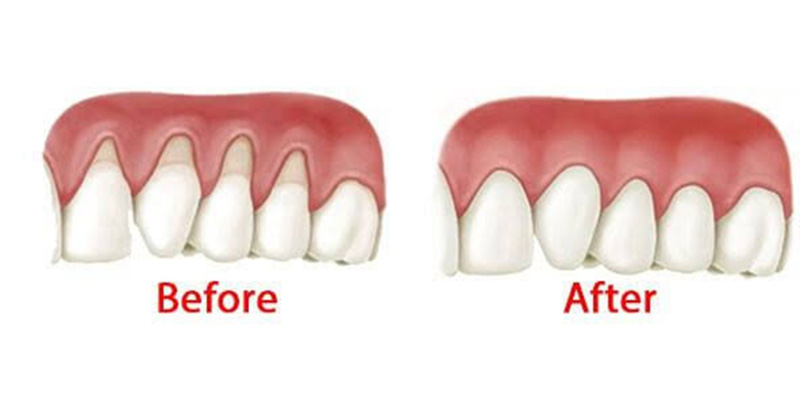
SYMPTOMS OF GUM DISEASES
- Gingival bleeding when brushing teeth or flossing teeth
- Pus between teeth and gums
- Pain when chewing
- Dental hypersensitivity ,Softness, redness, or swelling of the gums with incompatible removable partial denture
- A bad breath that won't disappear even if you brush your teeth
- Deep space between gums and teeth
GUM DISEASE STAGES OR TYPES:
Gum diseases can be classified into the following phases:
GINGIVITIS
This is the earliest stage of gum disease, which is characterised by plaque accumulation on the gums. If plaque remains after brushing and flossing, it might irritate the mouth. Brushing and flossing will cause your gums to bleed at this time. Because the bone is not injured at this time, there is a good possibility of healing.
PERIODONTITIS
If left untreated, gingivitis can progress to periodontitis. This is when your bone begins to be affected. As a result of the spaces generated between the bone and the gum line, bacteria will have a place to deposit food. Periodontitis can be avoided if you visit your dentist on a regular basis. Periodontitis is a kind of gum disease that has progressed.
ADVANCED PERIODONTITIS
This is the last stage of gum disease, when your bone has been damaged, causing your teeth to loosen even more. Surgery is the only way to save it. If the situation is severe, surgery will not be able to preserve your tooth, and your dentist will have to extract it.
TREATMENT OPTION OF GUM DISEASE
The type of therapy is determined on the stage of gum disease. Your medical history and overall health also play a role.
Treatment options include non-surgical therapy as well as surgical procedures.
There are a variety of non-surgical options available:
Scaling & Root Planning
This is also a thorough cleaning procedure. The main difference is that your dentist will begin the procedure with local anaesthetic. Plaque and tartar are removed from above and below the gum line, followed by the smoothing of rough regions. The smoothing process aids in the removal of microorganisms. This is only done if your dentist discovers calculus deposits under your gums.
Deep Cleaning
This is done when the gum disease is still in its early stages. Plaque or tartar (which hardens the tooth surface) will be removed from below and above the gum line by your dentist. It is a preventative technique that aids in the prevention of gum disease.
Surgical Treatment Includes:
Bone Graft
This procedure is used to rebuild bone tissue. The dentist will use synthetic bone pieces or your own bone to restore the bone that has been damaged by gum disease.
Flap Surgery
The tartar is removed by making an incision on the gums. The uneven surface of the bone is sometimes smoothed to eliminate regions where germs that cause this illness might hide. This procedure is done to close the space between the gums and the teeth.
Soft Tissue Graft
If the gums have receded, this procedure is utilised. Gums from the roof of the mouth are obtained and sewn to the gum recession region.
Guided Tissue Regeneration
When the bone that supports your teeth is removed, this procedure is performed in conjunction with flap surgery. A thin piece of mesh-like cloth will be inserted between your bone and gum tissue by your dentist.